
Data, Data Everywhere
It seems like we are drowning in data; when it comes to tracking our workouts, is it important and which data should we be tracking? Read below to find out

The Data Revolution
Back to our regular programming this week… There was the agrarian revolution, the industrial revolution and now we are smack in the middle of the data revolution - the whole point of artificial intelligence is to increase the speed at which computers can sort through the almost limitless amount of data to provide solutions to a wide variety of problems. In the most succinct explanation possible, AI uses all of the data it can access to formulate the answers, basically by guessing what the next word in the sequence should be based on its review of data. So keep that in mind the next time you’re using Chat to complete the task - AI is not omnipotent, it’s just guessing…
When it comes to designing the exercise program to improve our health and extend longevity, data can be useful, but what kind of data, how to collect it and, most importantly, how to analyze it to determine whether you are experiencing the desired outcomes are the main considerations. In this post I’m going to share what I consider to be the most relevant data and how to collect and track it.
Yes, collecting data about our workouts can be helpful, but if we’re not actually spending the time to analyze it to find out where we could improve, then why collect it in the first place?
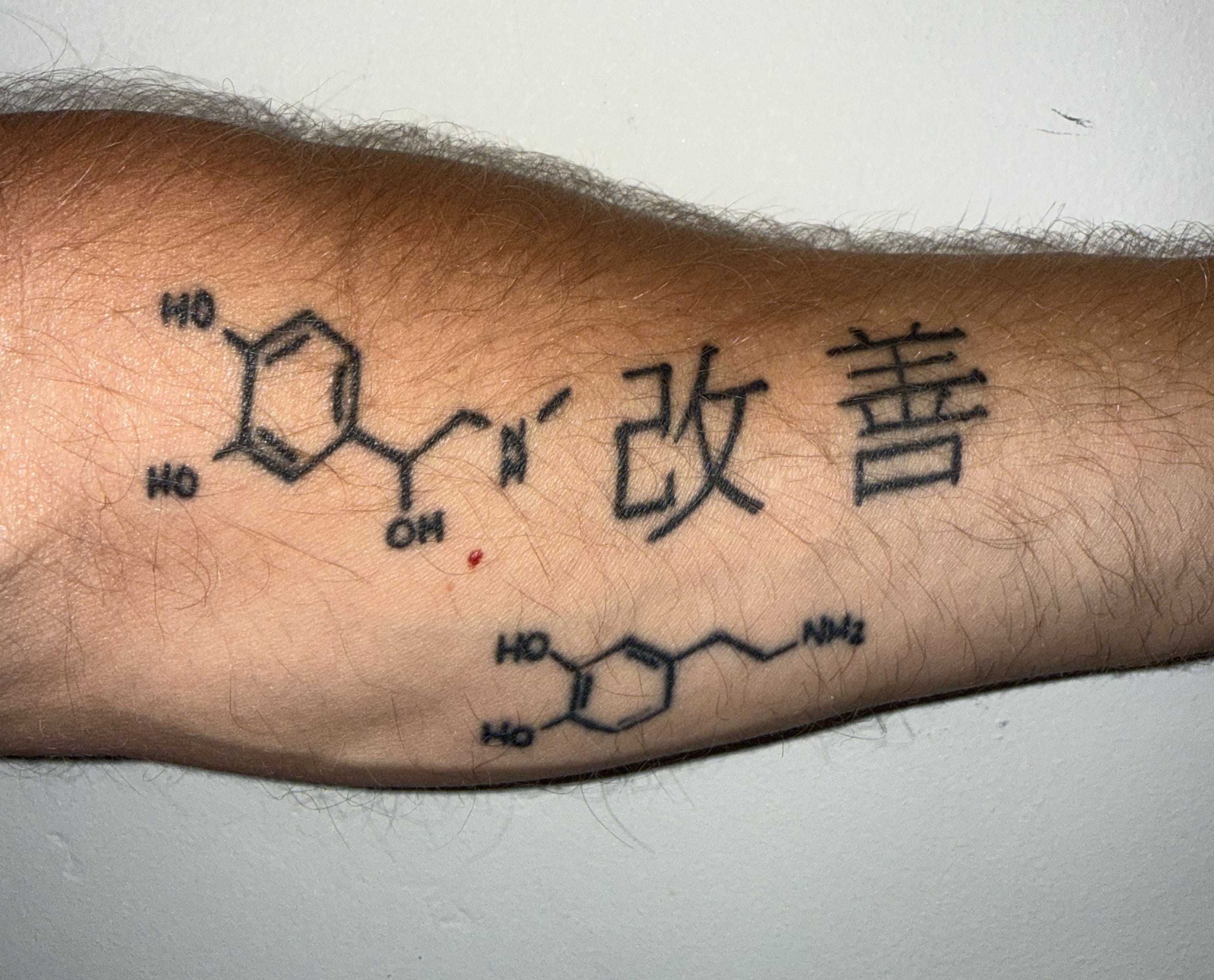
The picture above is a tattoo of the symbol for Kai-zen on my left forearm. Kai-zen is the Japanese principle of continuous improvement; hence, why it’s on my body, I want to remind myself to always work to get 1% better. If making sure that your workouts are having the desired outcome and that you’re constantly going up and to the right (making progress), then tracking workouts is essential. However, if you enjoy exercise as a release and a time for self-care, then tracking really isn’t all that important.
Long Relationship
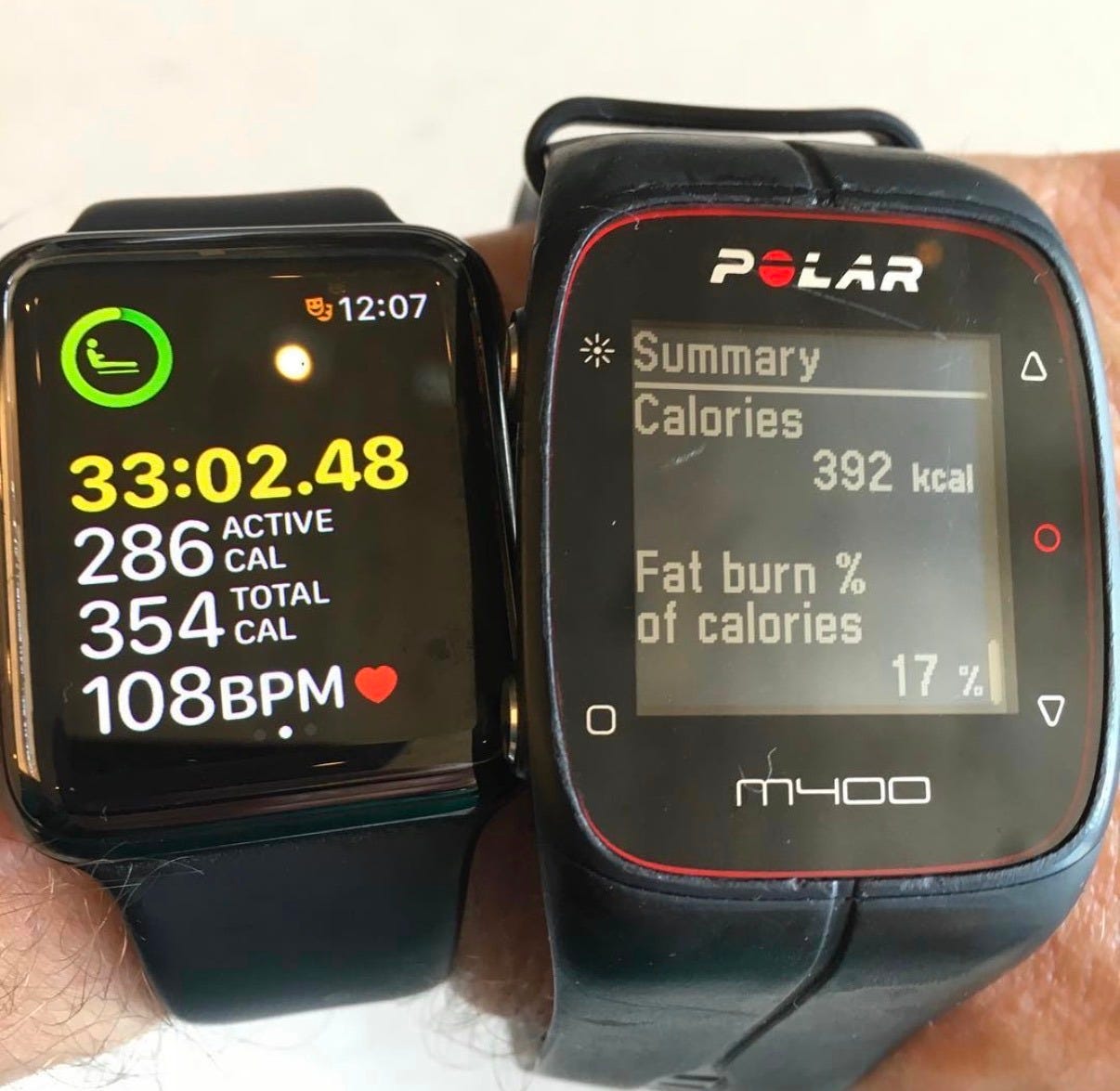
First, my relationship with fitness trackers goes alllll the waaaaay back to the 90s when I first started teaching indoor cycling. At the time, the health club where I worked provided Polar heart-rate monitors to people in class so they could monitor the intensity of the workout (this was 1999 and 2000, way before heart-rate monitors were accessible on watches). That is how long I’ve been using some sort of fitness tracker.
Unlike many in the longevity space, I’m going to go against the grain and suggest that while monitoring our data can be helpful, I really don’t think we need to spend too much time or energy obsessing about it. If you enjoy analytics and tracking your heart-rate and workout intensity come naturally, then go for it. It can be fun to quantify how your fitness changes.
Exercise is stress applied to the body; there are various ways to measure that stress to make sure it is being applied correctly. Yes, it’s important to understand how the exercise you’re doing affects your body, but my thesis is that we don’t need to overanalyze what we’re doing, or we can sometimes be caught up in trying to hit certain data points as opposed to creating a habit of consistency.
However, the good, actually GREAT, news for those of you who are data averse, it’s not really that important. Seriously.
When it comes to exercise, for any goal, consistency is the key data point - how many times you are exercising per week. If your goal is to improve health, then exercising 2-3 times is all that’s necessary. However, if the goal is longevity, then the goal should be to move your body EVERY day - some days should be high-intensity and hard, while others should be relatively low-to-moderate intensity where your body is moving, but you are not fatiguing. For more info on how to plan a perfect week - READ THIS POST.
The point is, the more consistent we can be, the more likely we’ll have the favorable outcomes that we are working towards; so, days per week is the key performance indicator to track closely, after that, tracking should be based on your specific goal and resources available.
The following are a few data points to consider tracking, IF they are relevant for your goal.
Heart-rate, Calories Burned and VO2 Max
The first data points to discuss are heart-rate, calories burned during a workout and VO2 max, because they are all connected.
Yes, monitoring and tracking your heart-rate and calories-burned during a workout provides feedback on how hard you’re actually working, but if data collection and analysis is not your thing, there is absolutely no reason to go out of your way to track your workouts. You can monitor your workout intensity simply by how hard it feels and how fast you’re breathing.
Some workouts, like Zone 2 cardio, breathing should be faster than normal, but consistent and at a pace that allows you to talk, but not hold a conversation. While in other workouts, like high-intensity interval training (HIIT), the intensity should be hard enough that you’re breathing too quickly to even consider talking.
Here’s some important 411, the heart-rate zones, like zone 2, are based on how your body metabolizes nutrition substrates into the energy that fuels muscle contractions. Zones 1 and 2 are aerobic, meaning energy is being made with oxygen. Zones 3 and 4 are where you are exercising so hard that energy is being made without oxygen, leading to metabolic by-products that elevates blood acidity (that’s why your muscles ‘burn’ during hard exercise, the blood is becoming acidic). Being able to talk during a workout means you are burning primarily fat and exhaling mostly oxygen. As your muscles work harder, they will burn carbs, with and without oxygen - which is why you start breathing much faster, to remove the carbon dioxide being released from carbohydrate metabolism. (Here is a previous post that goes into detail on the differences in intensity).
That’s how you track intensity; if you can breathe, you’re working aerobically, burning mostly fat. When you are exercising so hard that you are breathing too fast to talk, you are working anaerobically and metabolizing carbs without oxygen and THAT is what results in elevated levels of hormones like peptide growth factors, growth hormone and brain-derived neurotrophic factor (BDNF).
The reason we need to do hard exercise is that it changes our bio-chemistry to produce the hormones that help us grow muscle. The more muscle we have as we age, the healthier we will be. If you want to obsess about whether your heart-rate is in one zone or another, go for it; otherwise, rest assured, that when you are breathing fast while exercising, you are indeed doing the hard work that will help you grow muscle.
Heart-rate
Show how fast the heart is beating, an indication of intensity or workload; think of it as the tachometer on your car (which measures how hard your engine is working so you don’t push it to the breaking point). The harder, more difficult the exercise, the faster the heart-rate. If you’re into endurance sports (think, cycling, running, swimming), then yes, tracking your heart-rate is important because most of the training volume (approx 70-75%) should be done aerobically - where the heart is beating faster than normal, but talking is possible (approx 60-75% of the max heart-rate). NOT being able to talk during exercise indicates the heart and lungs are working hard to bring oxygen in and push carbon-dioxide out (generally above 80% of the max heart-rate).
When muscle cells metabolize carbohydrate for fuel, carbon dioxide is the by-product, which must be removed from the lungs. Not being able to talk during exercise means that you’re most likely working anaerobically and metabolizing carbohydrates without oxygen. Monitoring your heart-rate can help you identify the intensity of exercise where you are most efficiently using fat or carbs for fuel
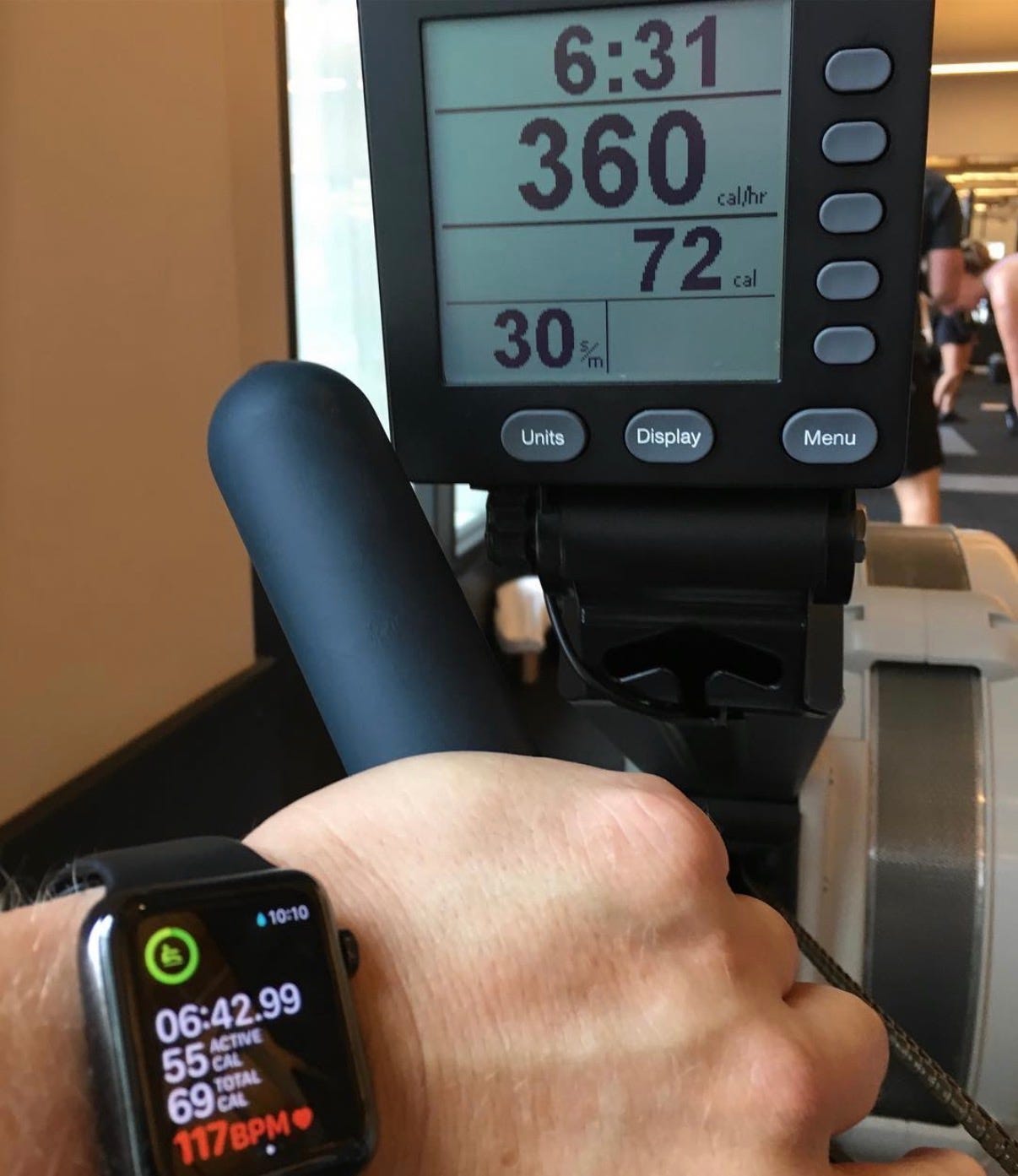
When it comes to calories burned, most trackers use an algorithm based on heart-rate, age, weight and a variety of other variables to provide that estimate. The human body burns about 5 calories to use 1 liter of oxygen. If a tracker can estimate the amount of oxygen used, then it can provide an estimate on the amount of calories burned. Most trackers use an estimate of oxygen flow to calculate calories burned. It’s a guess, at best. I wore an Apple Watch for a few years and would pay attention to those data points, it was useful info, but I didn’t live or die by it. Tracking calories burned can help you quantify how hard a particular workout might be, but since the number is not 1000% reliable, there’s no sense in being overly concerned with that data point.
VO2 Max
This is the volume of oxygen consumption whether at rest or during exercise. Resting VO2 is approximately 3.5 mL/kg/min, which means that we are using approximately 3.5 milliliters of oxygen per kilogram of bodyweight per minute while at rest. During exercise, muscles will need oxygen to produce energy and the heart will have to beat to deliver that oxygen to the working muscles; a higher VO2 means that the body can process a greater volume of oxygen, resulting in a higher work capacity for exercise. VO2 measures how efficiently your body uses exercise, a helpful data point, but unless you are recovering from a pulmonary disease, or are a die-hard endurance athlete, I wouldn’t spend too much time worrying about it.
Trackers that estimate VO2 are using a derivative of the formula for calorie burning, since they’re related. Endurance athletes could benefit from a VO2 test, it can help determine whether you are training at the right intensity and volume for your needs. FYI, a VO2 test can be uncomfortable because you have to exercise to a point of extreme exertion. If you can tolerate it and are interested in using the data to improve your VO2, go for it, otherwise, just pay attention to how hard you’re breathing.
The one data point to pay attention to is how quickly you recover to normal breathing after hard exercise. The faster you return to normal breathing after a hard bout of exercise, the fitter you are.
Bodyweight and Body Composition
Bodyweight is the most common data point to track; and now the good news is that there are a variety of different bioelectrical impedance (BIA) scales that can not only give you your bodyweight, but will tell you how much of it is muscle versus fat mass. BIA technology has a few drawbacks, but if the measurements are done at the same time, in the same conditions, they can provide consistent data so you’re comparing apples-to-apples.
I know I said we shouldn’t be overly concerned about data tracking, but when it comes to longevity, a BIA scale would be a good investment simply to track how much muscle you’re putting on. In my opinion, we don’t need to worry so much about total weight, but we do want a system to make sure that we are adding muscle. Keep in mind that muscle is an organ of our metabolic and endocrine systems, what researchers are observing is that the more muscle an individual has, the healthier they tend to be. A BIA scale would be a good tool to measure the muscle that your strength training program is adding to your body.
Amount of Weight Lifted or Miles Run - Track overall volume of exercise
Tracking the amount of weight lifted or the distance of a run is an easy way to measure progress. It can be very rewarding to see yourself improve from doing an exercise for 8 reps with 15 pounds to doing the same movement for 15 reps with 20 pounds; writing down your workouts will allow you to see that growth. If you need the feedback to stay motivated, track your workouts. It doesn’t need to be fancy, the only time I really track how much weight I’m lifting is when I’m trying to improve in a specific lift (like a deadlift or 1 arm press); and when I’m tracking my workouts, I just use the notes section of my phone.
Here is an example of a recent workout from the notes section. This makes sure I’m consistent with loading and it allows me to track progress. It can be tedious writing down each set, which is why I only do it when working on something specific:
Rdl 60 x 15 65 x 15 15
Windmill 45 x 10 10 10
Split squat 35 x 12 12 12
overhead press 30 x 12 x12 35 x 22
Goblet squat 65 x 12 12 12
Face pull 110 x 12 12 12
Lateral raises 15 x 15 15 15
You don’t need to track every set of every rep, but if you have a hard time remembering the last weight used, it might be a good idea to just write down the amount of weight and the goal for reps and be consistent with that.
For example, I tell clients to focus on adding volume (more reps) before increasing weight. The instruction is: use a weight that makes 10 reps very difficult, keep using the same weight until you can do 20 reps, once you can do 20 reps, select a heavier weight and start over at 10 reps. This develops strength endurance, supporting metabolic health of the muscle tissue.

I am not a runner, but I hike and mountain bike and when I do, I like to use Strava to track the distance and time. The only reason I do this is to challenge myself to maintain the same workrate - if I saw that I did a hike (say, long coyote - IYKYK) in 1:20 (an hour and 20 min.) then I want to challenge myself to meet or beat that time the next time I’m on that trail. That’s how I make sure I’m progressing. This is me competing against myself to get fitter as I get older.
Tracking Exercise Intensity - Scale of Perceived Exertion
The scale of perceived exertion is an estimate of how hard exercise is; 1 is not moving, 10 is exercising at the hardest level possible. The goal for longevity is to complete 2-3 strength training workouts per week at a level 8-10/10 to ensure healthy muscle growth. Other strength training workouts should focus on body weight; think, core training, mobility, yoga or TRX and should be at an intensity of 6-7 and below. If you’re feeling great, push yourself and know you did a 9. If you have a busy day, a 30 min., bodyweight core training workout, at a level 5-6/10, is better than no exercise at all. Pro Tip - NEVER have 2 8-10 workouts in a row. It takes about 36-48 hours to replace muscle glycogen. Doing a 2nd hard workout without a complete recovery could result in an injury or, at the worst case, rhabdomyolysis, where the blood goes beyond acidic to toxic.
Fun
The final data point is how much do you actually enjoy doing the workout? Yes, the operative term is ‘work,’ which implies effort, BUT, exercise takes place in our personal time, so we should enjoy what we’re doing. Plus, isn’t it always awesome to do something fun?
Think of exercise as something you GET to do. If you have the ability to move your body, you have the ability to exercise and make yourself stronger. The more muscle you can add, the healthier you should be in the long run. Making the time to do strength training is an investment in your future self.
Picture yourself in 5, 10 or 20 years. What do you look like? What is your physical capability? How do you stand? How well can you move? Taking the time to make strength training a habit now means that in 20 years you should have a body that allows you to enjoy ALL of your favorite activities.
Making exercise fun means that it will be much easier to make it a habit that you can enjoy a lifetime, hopefully a long and fruitful one.
There are other data points to track like blood markers, but for this post I wanted to focus on what we can track during exercise. A future post will share my thoughts on using blood testing to monitor our health data. In short, I support it, but only as a means of ensuring that training is having the desired effects.
Do What Works for YOU
Keep in mind, I have adhd - yes, I recognize the importance of data, but I’ve found that for my own workouts, if I start spending too much time tracking them, then I get hyper-focused and go down the rabbit hole, and can become obsessive. For me, it’s much easier (and better for my overall mental health) to focus on how I feel when moving my body as opposed to tracking any specific objective data points.
The point of this post was to identify specific KPIs and share my thoughts about whether we should be tracking them. It can be helpful to track things for a while to make sure that you’re continuously improving. Do you track your workouts? If so, how and which KPIs do you focus on?
Thank you for reading!
To support the Strength Training for Longevity substack:
Subscribe (for free)
Provide a gratuity (very greatly appreciated - if the info you read here is helping you to optimize your health, this is a great way to say thank you).
Become a paying supporter (only $8/month - same as a magazine), or
Or, just keep reading, apply what you learn and share with your community - let’s make the world a healthier place together!