
Long-Term Athletic Development for Longevity
In 2016 I wrote a blog on how we should be exercising throughout the decades. Now, with a decade more of experience under my belt, I’m updating my thoughts on how we should be training as we age.

Getting Older Beats the Alternative
We don’t stop exercising because we grow old, we grow old because we stop exercising.
In the summer of 2016, I wrote THIS BLOG for the American Council on Exercise suggesting how our exercise programs should change and adapt as we age through the decades.
This piece became a foundational component of Ageless Intensity: High Intensity Workouts to Slow the Aging Process; that book goes into the details of how strength training, power training and high-intensity interval training (HIIT) provide significant health benefits to an aging body.
LTAD for Longevity
In part 2 of Long-Term Athletic Development for longevity will update what I wrote in 2016 and suggest a new LTAD strategy for those of us interested in optimizing our longevity.
Considering it’s been 10 years, I have a few new thoughts on how we should adjust our exercise programs as the years pass. Keep in mind that, while based in science and peer-reviewed research, these are my personal thoughts and opinions and NOT the only way to approach exercise, but a way that could have a significant impact on our long-term health.
First and foremost - we should train like an athlete, NOT a bodybuilder. We want to be able to move in all directions and at all speeds with precision, coordination and grace.
That means no matter what decade we are in, we want to base our exercises on the fundamental movement patterns: squatting, hinging, single-leg, carrying, jumping, pushing, pulling, rotating and throwing.
Our brains know movement, not muscles. Exercise is a function of movement, the better we can perform the fundamental patterns, the better our overall coordination and the lower the risk of injury.
When designing your strength training programs, focus on performing the fundamental patterns on your feet as much as possible to develop full-body strength. Basing exercise selection on the movement patterns will help the brain integrate and coordinate many different muscles working together at the same time (not only will your muscles get stronger, but so will the gray matter between your ears, doing movement-based exercises is good for the motor cortex).
Finally, our bodies burn approximately 5 calories to burn 1 liter of oxygen and 2 things can help us burn more calories: movement patterns that use more muscle mass increase oxygen consumption (yielding more calories burned) and performing multiple sets in a row, via circuit training or complex sets, can increase overall oxygen consumption. That’s the cool thing about strength training, it stimulates the growth of healthy muscle tissue while increasing overall caloric burn. No matter what decade you’re in, when the goal is exercising to improve overall health, strength training IS the foundation of the program.
Bottom line:
Training like an athlete means following workout programs based on movement patterns as opposed to isolation exercises. Muscles that fire together, wire together - training movement patterns will develop strength between all of the muscles and that’s what we want as the years pass. For metabolic conditioning (what many normally call cardio), focus on workouts that engage specific energy pathways like aerobic oxidation (Zone 2) or anaerobic glycolysis (high-intensity interval training - HIIT), because each provides specific benefits.
Athletes train to perform. Think of life as a sport - we need fitness to be successful. I like to define fitness as: having the ability to do what you want to do when you want to do it. In other words, when you are fit, you have freedom to live your life, your way - and how awesome is that?
The fitter and healthier you are, the more freedom you have to enjoy the life you have worked hard to earn.
Use the following as a general guide for how to get to the point where the kids are out of the house and it’s time to focus on living life how YOU want!
The 20s and 30s
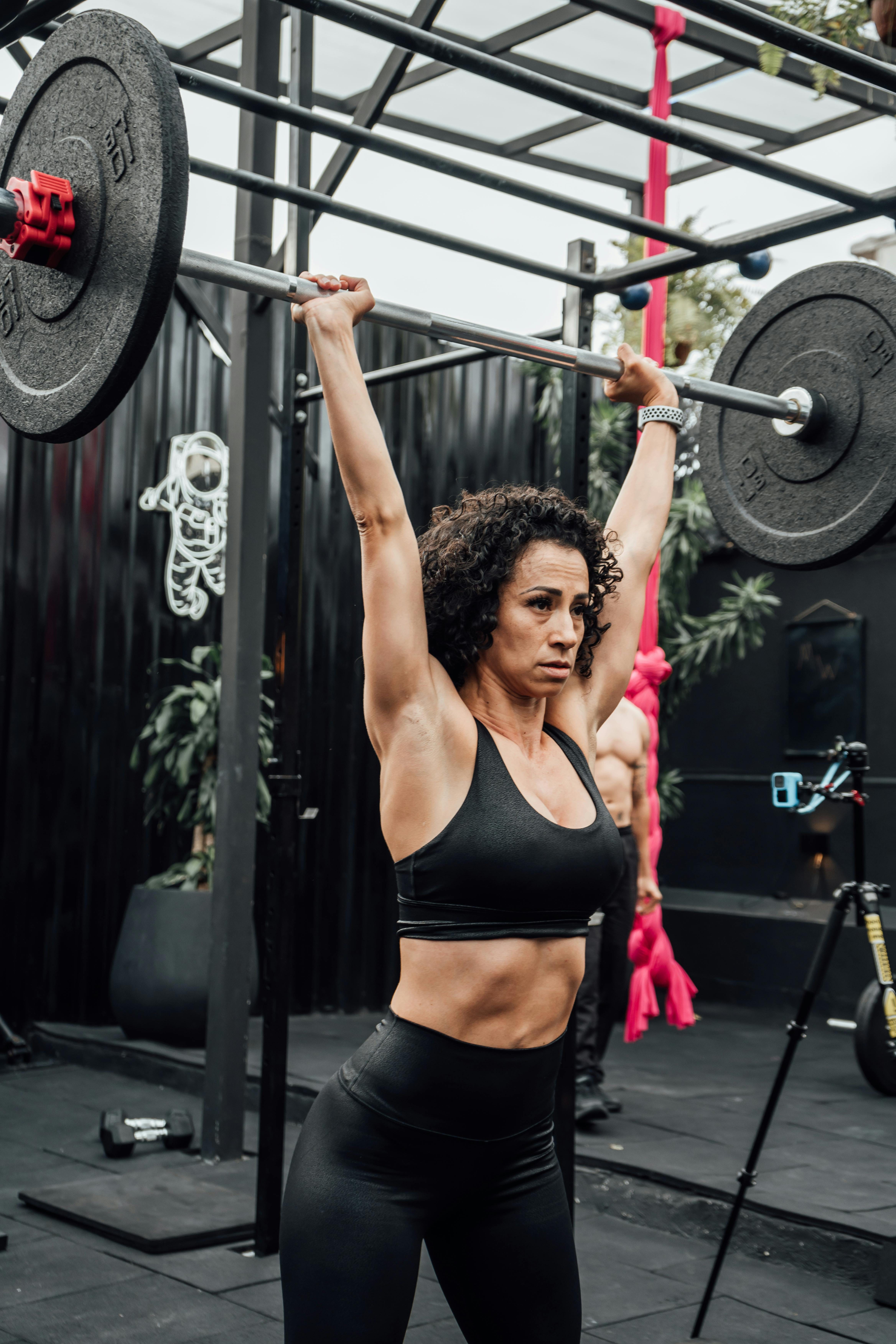
For adults in this age range, work on establishing the habits that will last when life becomes busier with work and kids - yes, it WILL happen, so build those healthy habits now. Identify your favorite modes of exercise and focus on making it a consistent habit. Since this is most likely the time before kids, it’s an opportunity to be self-indulgent and focus on being as fit as possible. Training to enter races and competitions, like Hyrox. Challenge yourself- do hard exercise and grueling physical events. Develop the mental toughness to do hard exercise and build physical resilience now, it will serve you the rest of your life.
The 40s
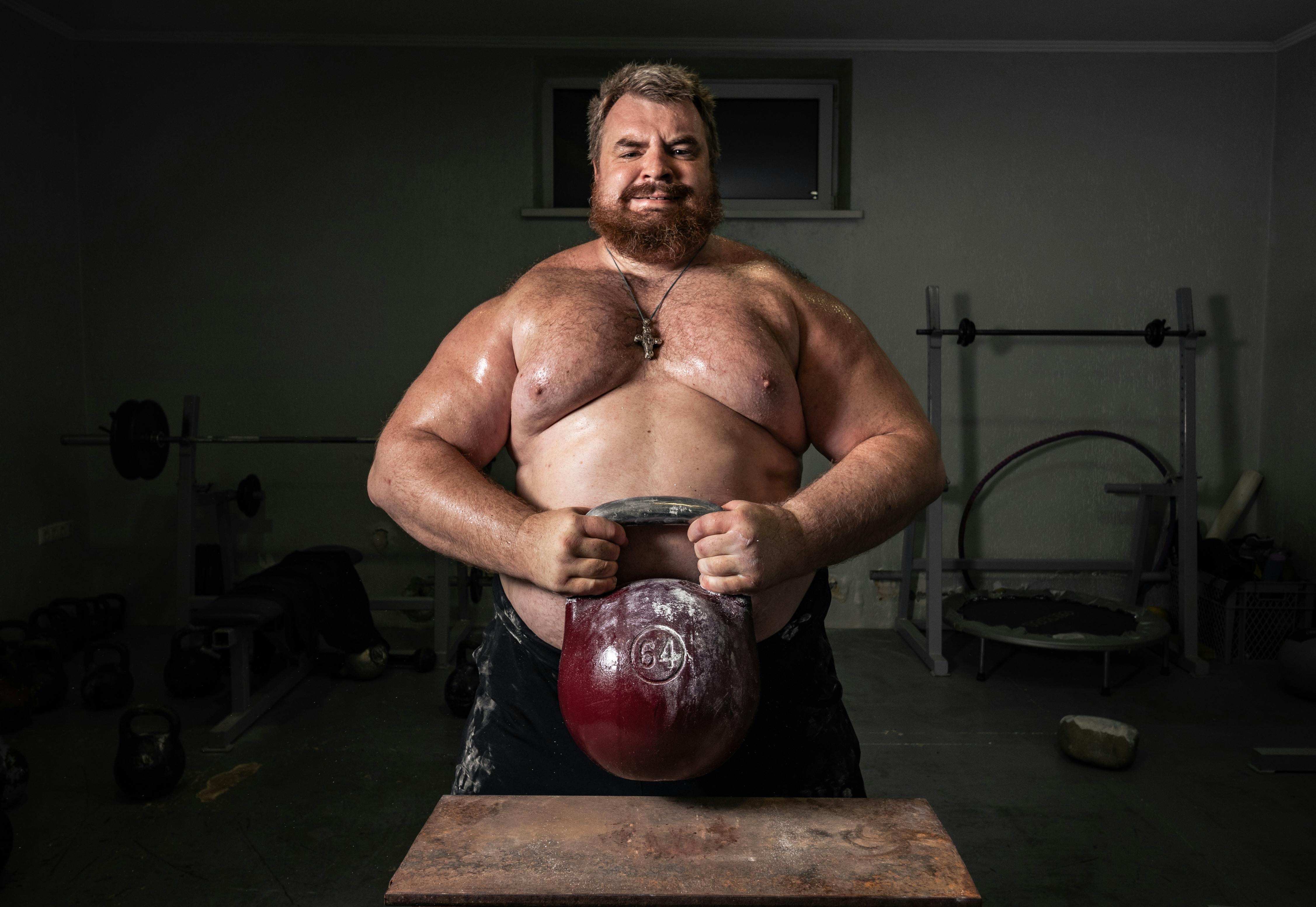
This is the decade where the career should be settled and you’re focused on trying to do life at life’s speed: work and family are top priorities. If exercise is a habit as you hit this decade, it will remain one. My advice for this decade: Get strong. Really strong. Intramuscular coordination refers to the number of motor units and muscle fibers engaged in a specific muscle. Strength training with heavy loads; 5 reps or less to a point of fatigue, can be an extremely effective way to stimulate more motor units to increase intramuscular coordination.
Most exercise physiology texts say that we lose 10% of muscle mass per decade, and this can accelerate in our 40s. Therefore, my hypothesis is that this is exactly when we should focus on training like strongmen (and women, or all people) and work on becoming ridiculously strong by performing lifts like deadlifts, squats, standing overhead presses, loaded carries,and finally, both weighted sled pushes and pulls.
The point is to increase intramuscular coordination and develop as much strength as possible because that strength becomes the foundation for the following decades.
This does not mean only lift heavy loads; what it does mean is make strength training with heavy resistance the foundation of the program. A well designed program will alternate between periods of heavy strength training and periods of low-intensity exercise to allow the body to rest and adapt to the training stimulus. This is a science known as periodization.
To learn how to properly periodize your workouts; read THIS POST.
The 50s
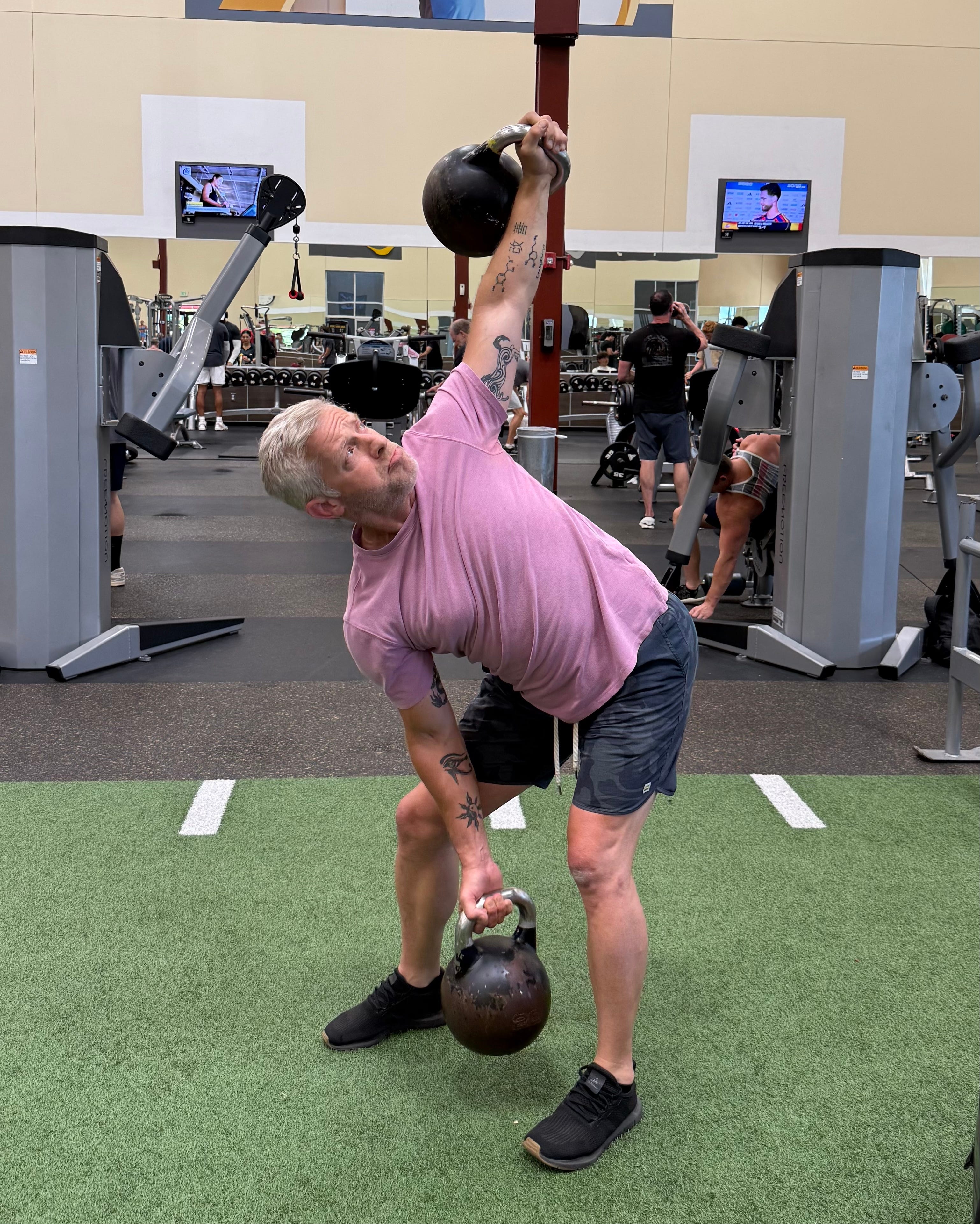
If the goal of our 40s is to train like strongmen, then my theory is that in our 50s we should train like bodybuilders and focus on muscle hypertrophy - increasing muscle fiber size, but still emphasize movement-based exercises to ensure optimal coordination and mobility.
Think of it this way, strength training in our 40s is meant to activate as many fibers as possible, now that we’re in our 50s (I’ll be 54 in August, 2026), we want to increase muscle fiber size through the application of hypertrophy training. We should still make the foundational patterns of movement the primary focus of exercise selection, but the other variables, specifically loading, reps and rest intervals, should be manipulated to focus on creating the mechanical and metabolic overload that stimulates muscle growth.
In our 50s we should also make sure that we’re doing at least 1 or 2 workouts per week focused only on moving our body, what is normally called mobility training. There is a balance of stability and mobility in the body, if we perform the same exercises repeatedly, we can limit mobility. When the primary training is muscle growth, making mobility a component of the training program ensures that muscle can perform its best. The most mobile parts of the body are the foot-ankle complex, the hip and the thoracic spine; keeping them happy in our 50s will go a long way to keeping our bodies functional for years to come.
Personal story
I turned 50 in 2022. Going into that year, I was 218 pounds, my birthday was in August and I made it my goal to get back to my college weight and hold that during my 50s. So far, mission accomplished, I got back to 195 lbs by August 2022, and I’ve hovered right around there ever since. And I’ve increased my overall muscle mass and levels of strength - the whole reason I share it is to show that it IS possible (of course working on a resort focused on health makes making time for exercise a littler easier).
The point is that in our 50s, we should focus on adding as much muscle as possible by training and eating like a bodybuilder - to grow muscle. Let me clarify, our program should be athletic-based by focusing on a movement-first approach to exercise selection, and we should still do high-intensity metabolic conditioning to optimize an anabolic environment for muscle tissue.
The good news is that if we’ve been exercising all along, then we have a solid base of muscle that we can build upon throughout this decade. It’s not easy, but it IS possible to add muscle as the years pass. I know because I’m doing it…
Our 50s is NOT the time to slow down, in fact, we should step it up so we can be in awesome shape for our…
The 60s
At this point we’ve been loading our joints and muscles for two decades, now it’s time to change gears and focus on explosive movements, not load, for maintaining muscle mass. Up to this point, I can speak from personal experience, but going forward, this is how I will be approaching exercise as I reach my 60s.
There are two ways to stimulate muscle fibers: load, or speed of movement. In this decade, we want to focus on the latter to optimize neural connections and juice our central nervous systems.
Think of it this way, Newton’s 2nd Law is that a force is the product of a mass and its acceleration; expressed as F = MA. In our 60s, we should switch gears by focusing on the A (acceleration) component of the equation to optimize nervous system function and tissue health.
Taking that a step further, work is defined as force x distance and power is defined as work divided by time. Meaning, moving at a rapid rate of acceleration is one way to manipulate the force-producing structures of a muscle and stimulate muscle growth.
This does NOT mean skipping traditional strength training, we should still lift weights, but we should make explosive movements the foundation of strength training programs throughout this decade.
Examples of explosive exercises include: skipping, jumping, bounding, medicine ball throws, kettlebell swings, kettlebell push presses, barbell push presses, etc. The goal is to move through the range of motion as fast as possible; this will stimulate the CNS to activate the motor units faster, increasing overall neural efficiency.
One benefit of explosive training is muscle growth, another is increasing neural activation of muscles, a third is energy expenditure - explosive exercises burn a lot of calories and a fourth is that the mechanical damage caused by explosive exercises stimulates production of hormones like T, GH and peptide growth factors, which are used to repair muscle fibers.
Here’s the long-term progression:
40s - become strong
50s - increase muscle size
60s - train muscle to be explosive
The 70s
If you’ve been following the progression, then this is the decade to alternate between the 3 different types of workouts: strength, hypertrophy and explosive. Whether workout to workout or phase to phase, consistently performing all 3 types of muscle action will keep muscle tissue metabolically healthy, anabolic hormones pumping and the nervous system firing on all cylinders.
Maintain HIIT training, but limit it to 1-2 times a week. Yes, you can train hard, but it’s important to respect your body and recover as hard as you train - when you push yourself with hard workouts, remember to allow time for your body to recover and repair so you can continue training at a high-intensity. 48 hours between hard workouts is enough time to allow for muscle cells to replace energy stores and muscle fibers to repair most of the damage; which means, 2-3 hard workouts per week during the decade. On the other days you still want to move, but there is no need to pound yourself into the ground on multiple days. This decade is where consistency will pay off.
If you have not been exercising for years, then the best bet for this decade is machine circuit strength training - the important thing is to use strength training to stimulate the growth of new, metabolically healthy, muscle tissue.
80s and 90s
At this point, double down on what works, what you have access to and what you enjoy. From the octogenarians I’ve worked with at the ranch, the common theme is to borrow from the 90’s hip-hop band Soul-to-Soul and, ‘keep on moving, don’t stop’ meaning stay active and move your body every day (and there’s your classic 90s reference for the day).
I’ve seen people in their 80s hike up and down mountains, take fitness classes and lift a good amount of weight - so do not tell me it’s not possible. Whether you think you can or you can not - you are right. If you make it to this point, why not push yourself with exercise? What’s the worst that can happen, you’ll die? If you’re in your 80s, you’re well past the average life expectancy, so if you go out from a heart-attack while on a 100 mile bike ride or trying to deadlift twice your bodyweight, so be it.
The point is if we’re fit, we have the ability to live life, so go live it. What good is living long if we don’t enjoy it?
Follow this progression as a guide, and once we are all in our 90s, let’s get together and compare notes on how we got there.
What’s your favorite way to train as you age? Please share below…
Thank you for reading!
To support the Strength Training for Longevity substack:
Subscribe (for free)
Provide a gratuity (very greatly appreciated - if the info you read here is helping you to optimize your health, this is a great way to say thank you).
Become a paying supporter (only $8/month - same as a magazine), or
Or, just keep reading, apply what you learn and share with your community - let’s make the world a healthier place together!
I like the emphasis on training for capability rather than appearance. Building movement skills, strength, and consistency over decades feels like a much more sustainable approach to healthy aging than chasing short-term fitness goals.
The foot-ankle, hip, thoracic spine call-out is the part I'd want to sit with longer. Those three joints tend to decide whether the strength built in the gym actually translates into moving well day to day.