

Always Learning
This is from a series on functional anatomy that was originally written for personal trainers; however, it’s been updated and is being posted to help you, the educated fitness consumer, understand how your core muscles function. For the better part of 2 decades my career has focused on educating personal trainers; one goal of the Strength Training for Longevity ‘stack is to educate you, the reader, on how to use strength training to extend your health span which means empowering you to be able to design your own workout programs. Knowing how your muscles work to move your body is essential for identifying the best exercises for your goals. This series will teach you how specific muscles function, as well as the best exercises for those muscles. This article will help you understand how your abdominal muscles function as an integrated system and identify exercises to achieve optimal function.
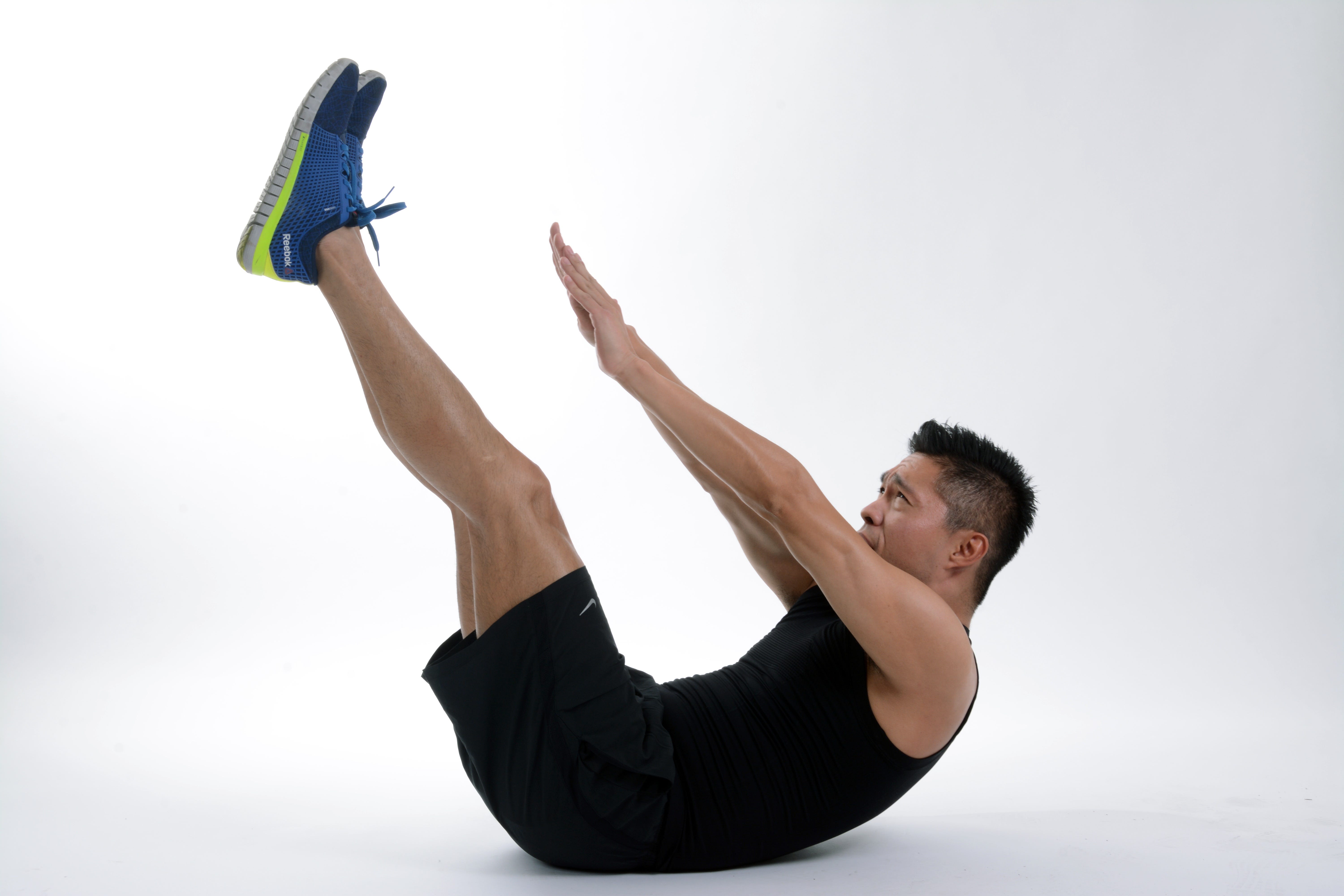
Much More Than Just Crunches
Now let’s get into learning about how your abdominals function to move your body. Muscles generate force for movement.; in addition, muscle cells are responsible for metabolizing fat and carbohydrates into energy to fuel that movement. Knowing how your muscles actually function to produce movement can help you to identify the best exercises for your specific fitness goals.
The abdominal muscles, specifically the rectus abdominus, are often trained in an inefficient manner that may not actually improve their mechanical ability to help you move. In an attempt to ‘sculpt a six-pack,’ many individuals, including possibly yourself, do crunches, however the only time the rectus actually abdominus flexes the spine is when the body is lying on the ground which begs the question - is this the most effective way to strengthen this muscle?
If we take a look at how the abdominal muscles are designed to function during upright movement patterns we will soon realize that a number of traditional exercises such as crunches should NOT be the foundation of an exercise program for the muscles responsible for controlling our body’s center of gravity.
Understanding Movement
Creating an exercise program first requires an understanding of how the body is designed to move. Movement in general, and exercise in particular, is a function of many muscles working together simultaneously, not a series of separate, discrete muscle actions.
Proper exercise selection for workout programs requires understanding how muscles function as an integrated system in order to train them to produce the right amount of force at the right time. The human body is designed to move and the foundational pattern of human movement is the gait cycle (walking and running); therefore the musculoskeletal structures of the human body work most efficiently when standing upright on the ground, not lying on the floor.
The skeletal and muscle structures in our bodies create kinetic energy from gravity and ground reaction forces in order to conserve metabolic energy meaning that as a mechanical structure the human body functions most efficiently when walking or running across the ground.
The traditional approach of understanding human anatomy for the purpose of designing exercise programs is based on the assumption that muscles function independently to perform separate, isolated actions. A more appropriate way to describe anatomy as it relates to human movement is that all muscles work together to accomplish a specific task.
Controlling Movement at the Center of Gravity
In the case of the abdominal muscles the word ‘core’ is commonly used to describe the muscles that control motion at the pelvis, femurs, rib cage or lumbar spine. This is an incomplete understanding because a number of muscles can influence motion at these structures which are not traditionally considered part of the body’s ‘core.’
For example the long head of the biceps attaches to the supraglenoid tubercle and the short head attaches to the coracoid process of the scapula which sits on the thoracic rib cage. If the biceps remain in a state of contraction it could pull the scapula out of position which then changes the position of the thoracic spine.
Another example is the superior attachments of the gastrocnemius on both the medial and lateral condyles of the femur. If the gastrocnemius remains in a state of contraction it can influence movement of the femur joint mechanics at the hip.
Researcher Dr. Stuart McGill describes the core as being “composed of the lumbar spine, the muscles of the abdominal wall, the back extensors and quadratus lomborum. Also included are the multi-joint muscles, namely, latissimus dorsi and psoas that pass through the core linking it to the pelvis, legs, shoulders and arms” (McGill, 2010). A separate model describes the abdominal muscles as being organized into layers: superficial, intermediate and deep. (Neumann, 2010) Regardless of the specific model, the muscles of the core region, around your body’s center of mass, function as the transmission of the body because they transfer forces generated from the ground, through the legs and trunk and ultimately out through the upper extremities.
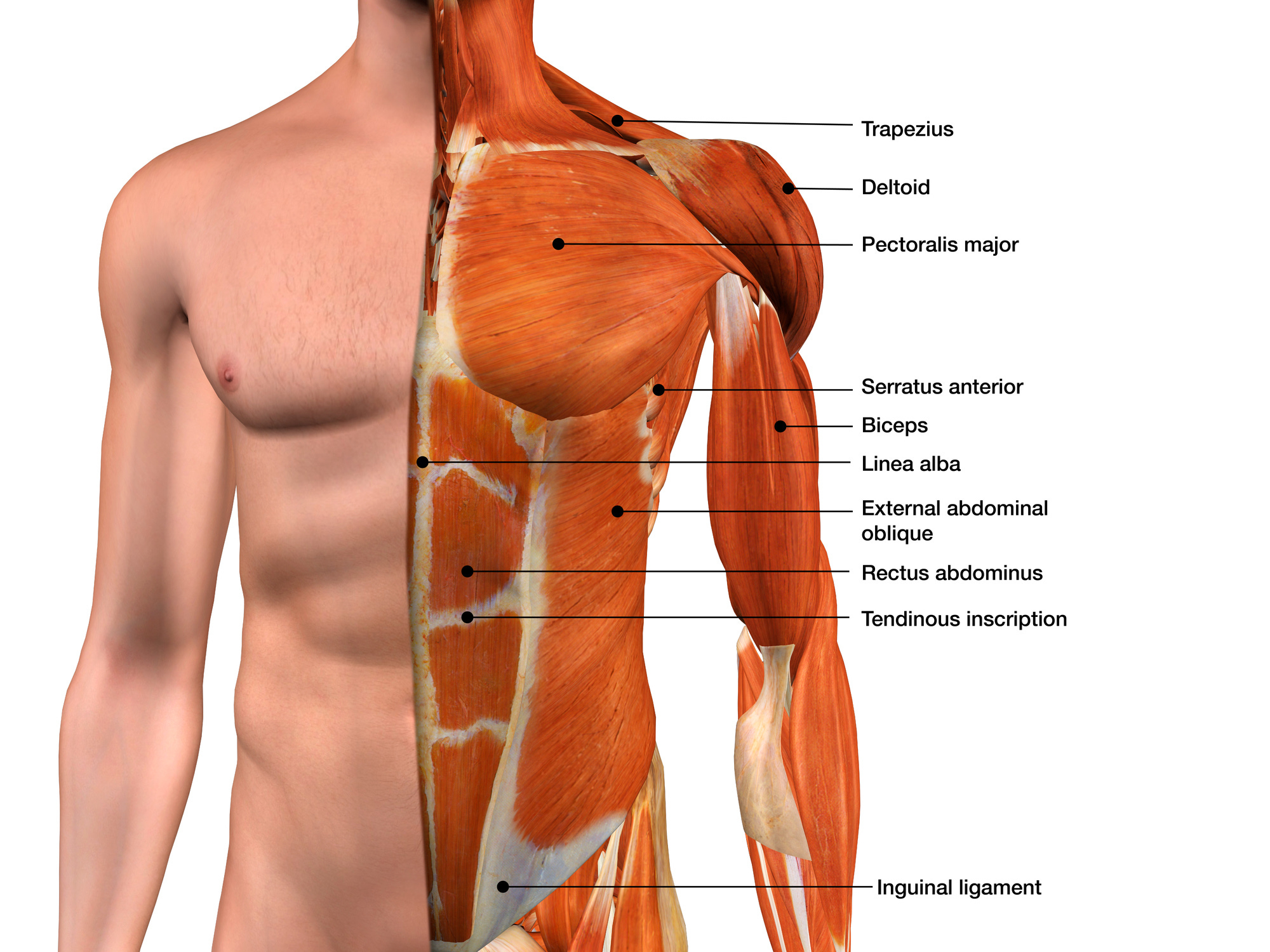
Layers of Muscles
The external and internal obliques, rectus abdominus (RA) and transverse abdominus (TVA) are all considered part of the deep layer in Neumann’s model and the abdominal wall as described by McGill. The muscles of the abdominal wall are layered against one another like the individual layers of a sheet of plywood. Because of the way the muscles are structured they are not capable of working in isolation and will instead contract together as one unit during upright movement. These deep muscles work together to control motion of the spine, rib cage and pelvis.
Effective training for abdominal muscles requires using movements that integrate the hips, trunk and shoulders in order to efficiently distribute the forces created by gravity, ground reaction and momentum during upright movements. Dr. Gary Gray, a physical therapist and founder of the Gray Institute, teaches education courses on anatomy, biomechanics and how to improve physiological function.
Dr. Gray describes how the abdominals are designed to function, ”The abdominals can be controlled by the brain to flex the spine when you’re lying on the ground but this is not how they actually work. The multiple layers of the abdominals are lengthened in all three planes as the rib cage and pelvis rotate opposite one another during upright movement in gait; this lengthening motion turns the muscles on reflexively which is their natural way of functioning.”
All You Ever Needed to Know About Your Core You Learned Before You Could Walk
Every time an individual takes a step he or she is accelerated into the ground by the force of gravity, at the same time the ground exerts an equal and opposite force upwards into the body. The summation of these two forces: gravity and ground reaction results in competing forces intersecting around the body’s center of gravity which describes what happens during the human gait cycle.
We also have to consider the neurodevelopment of how we learn to control our bodies as we progress from newborns to infants to childhood. Humans are one of the only mammals born not knowing how to walk. When you see a four-legged mammal depart from its mother it only takes a few minutes for it to learn how to stand on its feet.
The difference is that quadrupeds have four legs to support the mass of the body with a spine parallel to the ground while bipeds have a spine that is perpendicular to the ground and only two legs to support the weight of the body. This difference means that it can take a human approximately 10-to-14 months or longer to learn how to sequence and coordinate the muscle actions responsible for walking because the muscles and skeletal structures have to become strong enough to maintain a vertical position that resists the downward pull of gravity. (Enoka, 2002)
The natural stages of development are extending the spine, rolling over, sitting up, belly crawling, crawling, cruising (which is standing and walking while holding on to stable objects) and finally walking. During the stages of development the muscles are developing the timing, strength and coordination to integrate movements of the hips, pelvis, spine and shoulders; at NO POINT during the natural progression of walking does a baby lie on its back and flex his or her spine to perform a crunch. (Abernathy, 2005)
Put it this way, lying on your back to do three sets of abdominal and oblique crunches is actually working against the inherent neurophysiology of the involved muscles. Attempting to isolate specific muscles with traditional ‘core’ exercises will not train the tissues and skeletal structures to accommodate the multi-planar forces a client might experience when lifting a young child from a car-seat or crib.
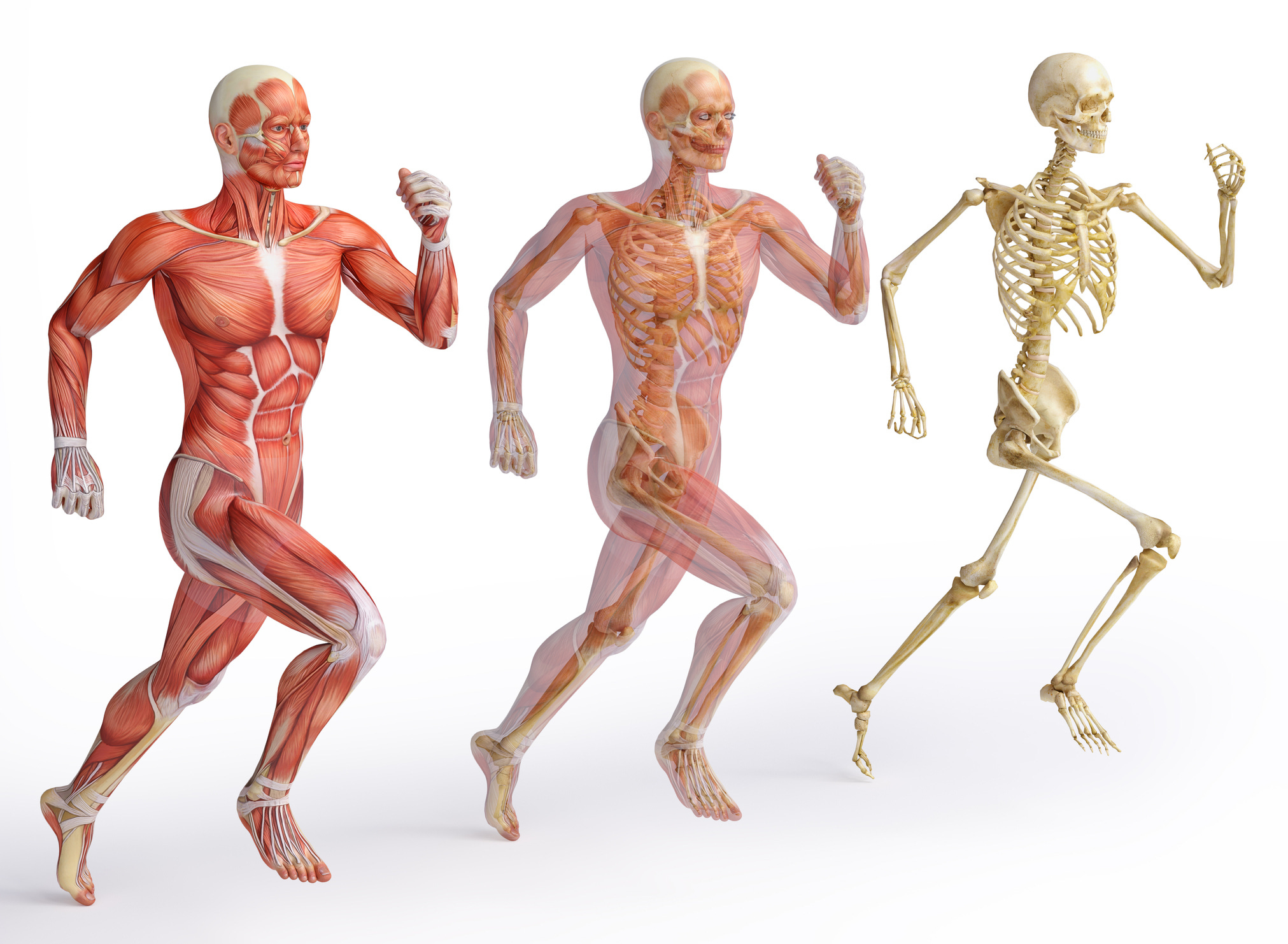
How the Body is Designed to Function
When walking or running during the gait cycle the body has to move in all three planes to create forward movement in the sagittal plane. The thoracic spine will counter-rotate relative to the pelvis in reaction to the momentum created by the arms and legs moving opposite of one another. During gait as the right leg swings forward the left arm is swinging forward and this counter-rotation of the torso and hips eccentrically lengthens all layers of the abdominal muscles. The layers of the abdominal muscles are designed to facilitate this multi-planar action to make it smooth and efficient.
In the gait cycle as the right leg transitions from mid-stance to heel-off (passing under the center of gravity) the right side RA and external oblique (EO) are working eccentrically to decelerate the anterior tilting of the pelvis caused by extension of the right femur while the left side RA and EO are working eccentrically to decelerate thoracic extension and rotation created by extension of the left shoulder.
This means that when we are moving in an upright position the RA is working in all three planes; now does the crunch look like the most effective exercise to train the tri-planar nature of this muscle?
Role of Muscle
Exercise is a function of movement. Movement is a function of the nervous system regulating forces throughout the structures of muscle, fascia and elastic connective tissue. Traditional exercise selection focuses on contracting a muscle to generate a shortening force, however during upright, functional movement like walking through the gait cycle it is the elastic fascia and connective tissue responsible for generating the forces producing and controlling movement.
During many upright movement patterns a muscle can maintain an isometric contraction to create tension in the elastic component allowing it to store potential energy during lengthening which is then released as mechanical energy when the tissue returns to normal resting length.
Muscles are designed to contract as a reflex to an applied stimulus. Besides storing potential energy when a muscle is lengthened, proprioceptors like the muscle spindles sense the length change and communicate with the motor units to create the necessary contractions. This occurs at the subconscious level as a reflex leaving our brain to focus its energy on more important matters like avoiding walking into traffic. If we want to maximize the efficiency of our workouts we need to consider program design strategies that train muscles how to react reflexively as opposed to cuing our clients how to consciously isolate and shorten a muscle.
According to Dr. Gray, “If we are training the abdominals to help us with function, to help with back pain, to allow us to run faster and throw better, and to just reach them to be a good part of the family of our body, we have to facilitate motion that turns on the proprioceptors that activates them.”
Exercise Strategies for the Muscles that Control the Center of Gravity
A muscle in a constant state of tension will not be able to shorten effectively to produce a force nor will it be able to lengthen to allow motion to occur, therefore effective exercise strategies for the abdominal muscles should include movements that eccentrically lengthen the tissue. Exercise programs need to follow an appropriate progression of first creating stability and proper sequencing of muscle contractions before progressing to complex, dynamic movements that involve all three planes of motion. Using stability exercises during a warm-up such as the plank, side plank and quadruped bird dog can allow the central nervous system (CNS) to develop efficient timing of muscle contractions before progressing to three dimensional movement patterns that lengthen the tissues in all three planes.
Dr. McGill has found that using ground-based, vertical exercises to train and strengthen the core is extremely effective in that spinal “stability is a ‘moving target’ which changes as a function of the three dimensional torques needed to support various postures and unexpected loads.”
McGill provides the following model of progressing core-strengthening exercises:
Corrective and therapeutic exercise to enhance stability and mobility.
Groove appropriate motor patterns.
Build whole-body and joint stability.
Increase strength-endurance.
Build strength.
Develop speed, power and agility.
NOTE: the year-long workout program all subscribers have been receiving, Strength Training for Longevity, applies this model of progression. Check the workouts to see how they flow from one level of progression to the next.
According to the principle of specificity, to ensure the highest level of success from a training program the exercises should replicate the movements an individual is required to perform on a daily basis. “Most training can be considered ‘core training’...With respect to program design, basic core strength and endurance will be realized through performance of most non-machine-based exercises such as during squats, deadlifts, chin-ups and push-ups’” (Contreras & Scheonfeld, 2011).
A strength-training program for the body’s center of gravity should perform most exercises in a standing position to properly prepare the body to produce and control forces experienced in activities of daily living.The program can start with exercises in the prone and supine positions to train optimal motor sequencing and muscle recruitment patterns during the initial phases of McGill’s progression. However, once an individual demonstrates the ability to properly brace the spine while moving the hips (step 3 above), the exercises should be progressed to a standing position to develop the specific strength required for a client’s goals.
The first two steps identified by McGill for training the abdominals will teach you how to maintain stability of the spine and train efficient movement patterns. Once you can maintain stability of your spine, start exercising from a standing position. Single leg balance exercises can be important for helping integrate abdominal function with the lower extremities and is one example of a training strategy. Another strategy for designing abdominal exercises is to recreate the movements of gait and have the rib cage and pelvis rotate over one another. A third strategy is to have the spine remain in a lengthened position as one leg moves into extension. Yet another strategy is to maintain stability of the spine while the arms and legs move.
Strength Training IS Core Training
The abdominal muscles contain a combination of type I and type II fibers; low-intensity, long duration stabilization exercises can be used one day to activate the type I’s while heavy resistance strength or power exercises can be used the next day to stimulate the type II fibers. Because they are performed from a standing position on the ground, using ground force to activate muscles, strength training exercises like the barbell deadlift, Romanian deadlift and Turkish get-up can be extremely effective for enhancing strength of all layers of abdominal muscles.
This is the formula for develop core strength, now go apply it!

Thank you for reading!
To support the Strength Training for Longevity substack:
Subscribe (for free)
Being a paying supporter (only $8/month - same as a magazine), or
Or, just keep reading, apply what you learn and share with your community - let’s make the world a healthier place together.


